
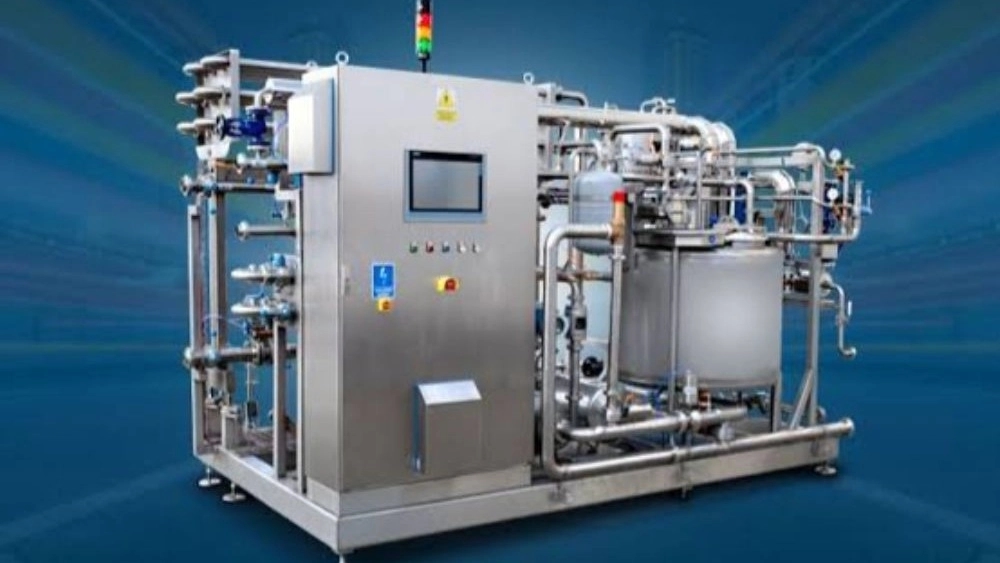
Tehran's Fatah area, as one of the largest and oldest industrial towns in the capital, has always been a reference for purchasing factory dairy equipment, especially sensitive machinery such as industrial pasteurizer. In the dairy industry, the pasteurizer plays a vital role; This device not only guarantees the safety of the consumer by eliminating pathogens, but also has a direct effect on the durability, texture and final taste of the product.
Choosing the right industrial pasteurizer is a big capital decision and the price of an industrial pasteurizer in Fatah area of Tehran is a function of many factors including capacity, type of heat exchanger, material and automation level of the device. The purpose of this article is to provide a comprehensive analysis for buyers so that they can **buy** the best equipment at a fair price by understanding these variables and benefit from the advantages of Fatah's geographical location. For any specialized advice in the field of determining **industrial pasteurizer price** and purchase, **https://baran-borodat.ir'** specialists are ready to provide services.
First part: Analysis of factors affecting the price of industrial pasteurizer
1.1. Production capacity (input flow in liters per hour)
The most important factor determining the price of an industrial pasteurizer is the nominal capacity of the device. Pasteurizers are usually produced from small capacities (e.g. 500 liters per hour for small workshops) to very high capacities (over 10,000 liters per hour for large factories). The higher the required capacity, the dimensions of the heat exchangers, the size of the holding tanks and the power of the pumps are increased, and as a result, the price of the industrial pasteurizer increases accordingly.
1.2. Type of pasteurization technology (HTST vs. UHT)
The choice of thermal technology significantly affects the **price of the industrial pasteurizer**:
* **HTST (High-Temperature Short-Time):** This method is the most common type for milk and liquid products, which heats the product at a temperature of about 72-75 degrees Celsius for 15-20 seconds. HTST devices usually have plate exchangers and their **industrial pasteurizer price** is lower than UHT systems, but the shelf life of the final product is shorter (requires refrigeration).
* **UHT (Ultra-High Temperature):** This system heats the milk at a temperature of 135 to 150 degrees Celsius for a few seconds, which provides the shelf life of the product up to 6 months or more without the need to store it in a refrigerator. **Industrial pasteurizer** UHT has a much higher **price** due to the greater complexity of direct or indirect steam injection systems and the need for sterile packaging (Aseptic Filling).
1.3. Construction materials and sanitary standardization
As mentioned earlier, the stainless steel material used directly affects the price of the industrial pasteurizer. The exchangers and pipes with which the valve is in direct contact should be of 316L grade steel, which has excellent resistance to corrosion caused by acids and chlorine. The use of 304 steel in these critical points endangers the safety of the product, and reliable manufacturers in Fatah region, due to adherence to standards, use high-quality material, which is reflected in the final **price**.
Second part: heat exchanger technology and its effect on cost optimization
A major part of the operating cost of a dairy factory is related to energy consumption for heating and cooling milk. An efficient **industrial pasteurizer** can greatly reduce long-term costs by optimizing heat transfer.
2.1. Plate Heat Exchangers
These types of converters are the most common choice for HTST processes. Their structure is made up of thin metal plates through which hot and cold liquid pass through alternate channels and exchange heat.
Key advantages:
2.2. Tubular Heat Exchangers
These converters are preferred for products with high viscosity, such as raw yogurt, heavy cream or products that contain suspended particles (where there is a possibility of clogging of the plates).
**The price of industrial pasteurizer** equipped with tubular exchanger is often slightly higher than plate models due to its more resistant structure against high pressure and the ability to better manage viscosity, but it is considered a reasonable investment in certain operating conditions.
2.3. Heat recovery systems (Regeneration Section)
A modern **industrial pasteurizer** has a heat recovery section. In this section, the inlet cold valve is preheated by the outlet hot valve (which comes from the cooling stage) before reaching the main heating stage. This technology significantly saves steam or electricity needed to reach the pasteurization temperature (for example, 75 degrees Celsius). In any **purchase** in **Fath Tehran**, the presence of this section is vital.
The third part: the role of automation and control systems in the final price
In the last decade, there has been a big change in the way dairy equipment is controlled. This change directly affects the price of industrial pasteurizer.
3.1. Manual control vs. PLC control
* **Manual/Analog Control:** On older or cheaper models, temperature and time settings are primarily done via manual taps and analog displays. These systems have a lower initial **price**, but their accuracy is low and they need a more skilled operator to prevent the valve from leaving the safe range.
* **PLC control and HMI (Human-Machine Interface):** Modern industrial pasteurizers work with programmable logic controller (PLC). These systems measure the exact temperature through RTD sensors and automatically adjust the pneumatic valves. This level of automation not only ensures product safety, but also enables data recording and reporting for quality management. The price of an industrial pasteurizer equipped with a PLC is higher due to the complexity of the electronics, but in the long run, reducing waste and increasing productivity compensates for this cost.
3.2. The importance of safety switches and diverter valves
The safety heart of an **industrial pasteurizer** is a three-way valve. This valve is responsible for returning the raw milk directly to the storage tank (Recirculation) if the temperature of the milk has not reached the limit of pasteurization and preventing unpasteurized milk from entering the distribution line. Ensuring the quality of these valves (which are usually pneumatic) and their correct installation is a non-negotiable factor in purchasing equipment.
Section 4: purchase considerations in Fatah area and after-sales service
When the buyers in **Fath area of Tehran** are looking for **industrial pasteurizer price**, they should pay attention to the local service and the supplier's ability to install quickly.
4.1. Specialized installation and commissioning
Incorrect installation of an industrial pasteurizer can waste the entire purchase cost. Common problems include leaks in the exchanger plates, misalignment of the unit, or improperly executed steam and cold water piping. Reputable manufacturers in Tehran usually provide on-site installation services. Technical consultations of companies such as **`https://baran-borodat.ir`** guarantee that your device will be installed in strict compliance with all technical instructions.
4.2. Provision of spare parts and preventive maintenance services
**Industrial pasteurizer** is a continuous work system. This device requires periodic replacement of gaskets and service of three-way valves. The short geographical distance of the supplier with you in Fatah accelerates the access to these spare parts. If the supplier makes the original parts readily available, your maintenance cost will be reduced and production downtime will be minimized. This after-sales service is an important part of the final **price** of the equipment.
Part 5: Comparison of price and value in the dairy equipment market
According to the fluctuations of the market and the currency price, the determination of ** industrial pasteurizer price ** requires the most up-to-date information. However, the true value of a device is measured by focusing on the "Total Cost of Ownership" (Total Cost of Ownership), not just the initial purchase price.
5.1. Calculating Total Cost of Ownership (TCO)
TCO includes the following:
A low-cost **industrial pasteurizer** that consumes a lot of energy or requires frequent replacement of washers will have a much higher **price** in the first year than a more expensive but efficient and durable device.
5.2. The effect of scale on pricing
Big manufacturers in ** Tehran's Fatah area ** usually have the ability to offer volume discounts. If you are planning to set up a complete line of factory dairy equipment, combining pasteurizers, storage tanks, and homogenizers from a single supplier often results in a significant reduction in overall equipment cost.
Conclusion: A smart investment for the future of dairy
Determining **the price of industrial pasteurizer in Fatah area of Tehran** is a multifaceted process that varies from the capacity and type of technology to the quality of automation and raw materials. To achieve the best return on investment, buyers should always seek a balance between a competitive initial **price** and long-term operational durability.
Focusing on equipment equipped with heat recovery exchangers, 316L steel material, and PLC control ensures the highest level of safety and efficiency. To receive expert advice on the most up-to-date industrial pasteurizer price and to choose a system that exactly meets your health standards and capacity, it is recommended to contact experienced experts. Companies active in this field, such as **`https://baran-borodat.ir`**, are a reliable reference for **purchasing factory dairy equipment** at the industrial level and can help you in this direction.